Ahimsa silk_study of a regenerative material 2024
Part of an ongoing research about the evolutionary relationship between humanity and natural textile materials, their extraction and transformation. Analyzing their socio-economic, symbolic and cultural characteristics, the research focus on the study of local natural resources (plant and animal origin), questioning a future perspective of regenerative and balanced material production between species, actively seeking to restore natural and social ecosystems, given the Anthropocene context in which we find ourselves.
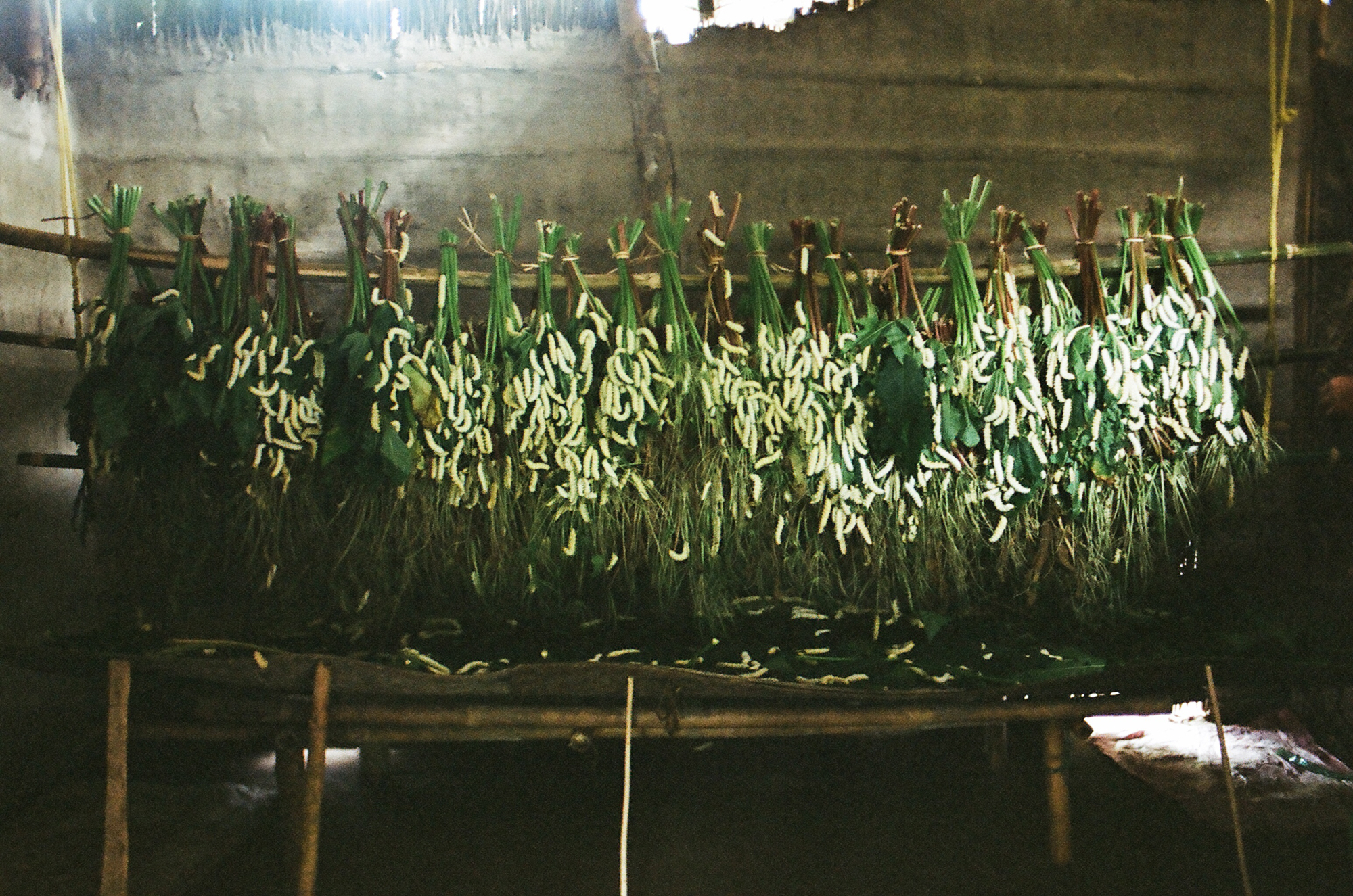
Silk, with its deep history and relationship with humanity, will be one of the materials studied, focusing for this project on the method of producing Ahimsa silk or Peace silk, since it is a material obtained without interrupting the life cycle of the silkworm, as opposed to the usual production method, in which the cocoon is boiled, interrupting the cycle of metamorphosis of the larva into moth. This type of silk has its production epicenter on an artisanal scale in the state of Assam, India, and is part of the culture of rural communities.
India has an ancient textile history, with knowledge of silk brought from China some 3,000 years after its discovery. Its climate and the rituals of cremating clothed bodies have not left many traces of this history, but its production and use are deeply rooted in local culture and traditions, and have a major socio-economic impact on communities in the region.
In this context, it is pertinent for the research to understand not only the non-violent silk production processes, but also the relevance of these materials in local culture and textile history, particularly in relation to the Khadi movement, started by Mahatma Gandhi in 1918. This elevated spinning and weaving to an ideology of local self-sufficiency, allowing independence from foreign materials, which at the time were entirely exported to England and then re-imported in the form of expensive finished fabrics, depriving the local population of work and profits.
In the bibliographical research carried out, we are given information about the relationship between silk and the religious and philosophical doctrines of the territory linked to the concept of Ahimsa. Ahimsa derives from Sanskrit and translates as “do no harm”. It is an important ethical principle of three major religions: Jainism, Hinduism and Buddhism. It concerns not harming any other living being.
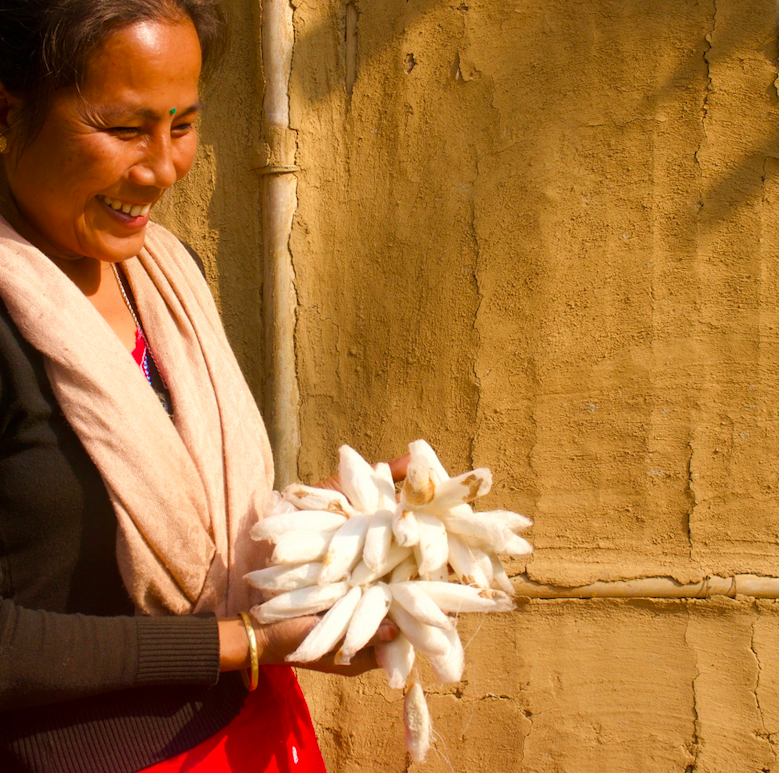
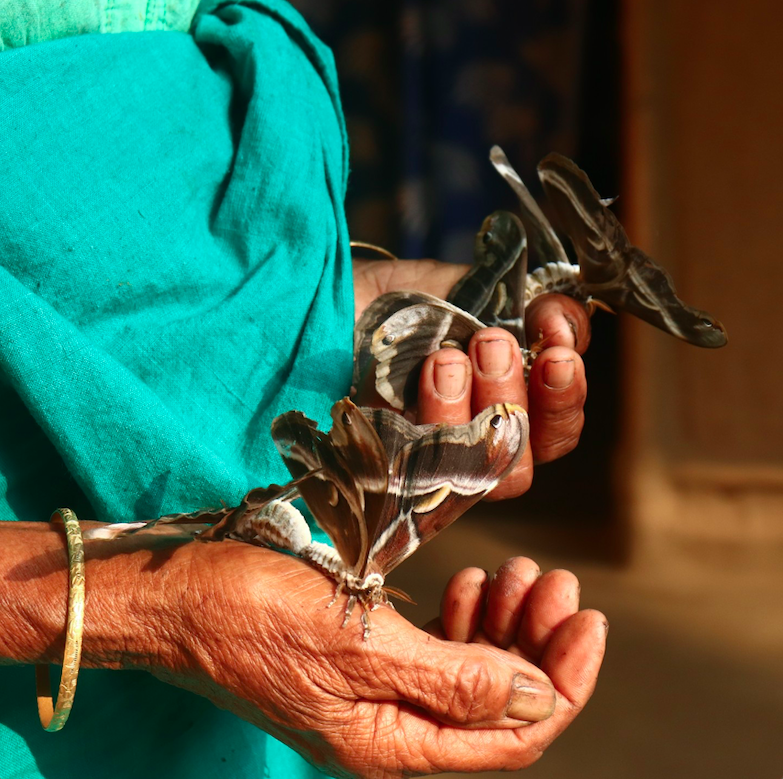
The production of silk following this principle is based on using the cocoons after the silkworm has completed its cycle of transformation into a moth and leaving it by secreting a component that dissolves part of the cocoon and allows it to be released. This process breaks the continuous filament created by the silkworm in the construction of its cocoon, resulting in interrupted and shorter fibers that are spun like wool or cotton fibers. This results in a less shiny and more textured type of silk, but with the same isothermal properties.
Acknowledgments: 7 WEAVES, WE ARE KAL, Juhi Pandey